Ventilated composite panel facade on a residential building

Composite panel · machining

Composite Panel Machining Service

We offer our clients all the services they need to install an aluminum composite panel facade.

  • CNC cutting, panel saw, and milling machine
  • Milling and bending; Trays ready for assembly
  • Installation in Catalonia
  • Shipping Worldwide

CNC Machining

Custom cutting, milling, and bending

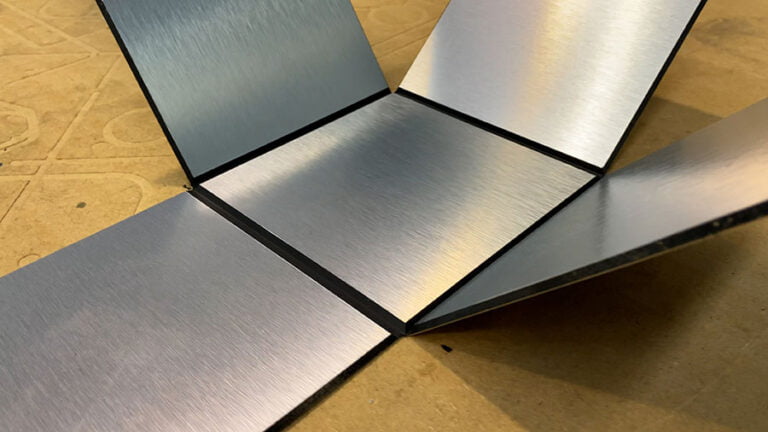
The finish of a composite panel facade depends largely on how each piece has been fabricated. In our workshop we cut the panel straight, curved or at an angle, mill grooves into the back face so it can be folded to 90° or 135°, and form trays with corners reinforced with aluminum plates and rivets. We also roll-bend panels, finish edges, perforate and engrave.

We machine each core with the right settings (A2, with its mineral filler, using diamond tools) and check dimensions, diagonals, milling depth and film direction to avoid color differences on the facade. As a result, the pieces arrive on site numbered according to the cutting plan, fit accurately and need very little adjustment. At StarModul we adapt the machining to the chosen mounting system and optimize the cutting plan to make the most of every sheet and keep costs down.

  • Cutting: CNC, panel saw, and milling machine
  • Milling and Bending: Trays Ready for Assembly
  • Filmed in Catalonia
  • Shipping: Worldwide
Residential building with a white composite panel facade
499x319xanotaciopccp81p202020 03 23p20121500 e1677775759320

Machining and Processing for Composite Panels

We offer a comprehensive composite panel machining service to ensure the success of your architectural and construction projects. El panel composite es la solución líder gracias a su extrema resistencia a la corrosión y el envejecimiento, pero su acabado premium depende de una transformación técnica precisa.

As specialists in the industry, we provide all the custom machining options needed to create tailored, durable structures. Our service combines efficiency with excellent value for money, tailoring the cost to the technical complexity of each part to offer a cost-effective solution at every stage of your project.

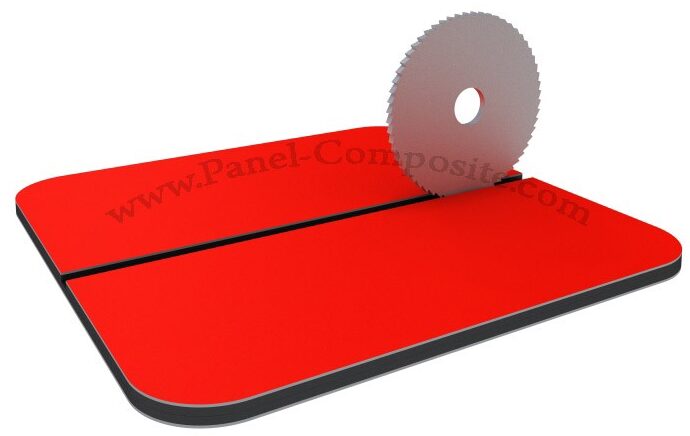
Cutting a composite panel

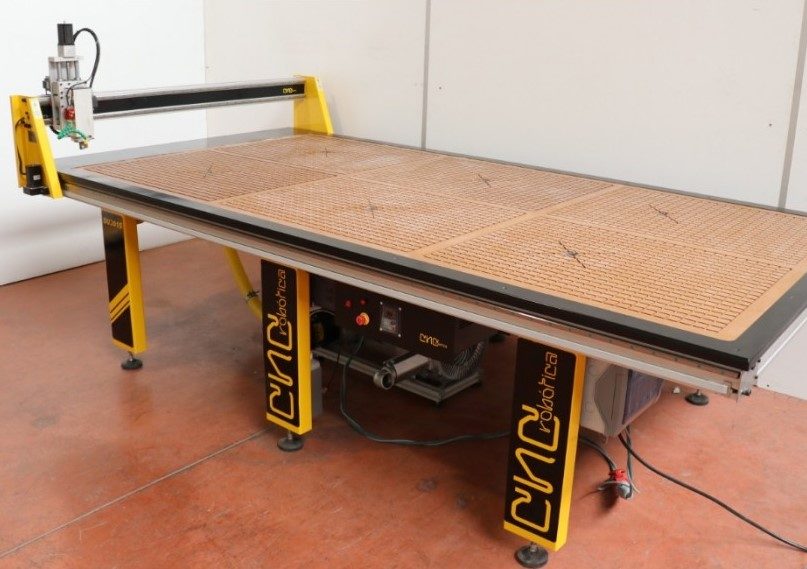
We provide a precision cutting service for composite panels using CNC technology, a wall saw, and portable routers. Esta maquinaria avanzada nos permite ejecutar cortes rectos, curvos y en ángulo con total exactitud, ofreciendo la flexibilidad de diseño necesaria para cualquier fachada arquitectónica.

Thanks to its balance of rigidity and lightness, the composite panel is the most cost-effective option for projects that require corrosion resistance and elegant finishes in solid or metallic colors. We create custom cut lists, optimizing material usage to ensure a low cost per square meter.

Available cutting systems:

  • Vertical circular saws: Designed specifically for large-format straight cuts.

  • CNC Machining Centers: State-of-the-art technology for straight cuts and complex curves.

  • Shears: A quick and easy solution for straight cuts with clean finishes.

Caja composite
Mecan- corte, fresado y doblado

Milling and Bending for Composite Panels

We transform composite panels into architectural panels using high-precision milling and bending systems. Este proceso técnico permite conformar pestañas perimetrales mediante un fresado parcial del panel, que posteriormente se doblan y refuerzan con pletinas de aluminio y remaches para garantizar la rigidez estructural de la pieza.

Thanks to our composite panel machining method, we can create embossed folds or 3D effects while always keeping the protective film in place to ensure a flawless finish. We perform technical milling on CNC machines, wall-mounted saws, or portable milling machines at angles of 90° or 135°, depending on the design requirements.

We use specialized tools and bending machines for composite panels that ensure the bend is positioned exactly in the center of the milled groove. This millimeter-precise control ensures that the final dimensions of the panels match the design specifications, facilitating quick and accurate installation on the facade.

Workshop Information

Machining Parameters

Milling for Bending

To bend the panel, a groove is milled on the back side, the core is removed, and the outer sheet is left with about 0.8 mm of material. The bend is made exactly along the centerline of the groove, either by hand using tools or with a composite bending machine.

  • Round groove (Ø 10 mm spherical cutter): 90° folds.
  • V-groove: 135° bends.
  • Arched slot: full 180° folds (not on panel A2).
  • On a 4-mm panel, milling depth of 3.20 ± 0.2 mm.
Approximate CNC Speeds
Core and OperationRotation (rpm)Feed rate (mm/min)
FR · cut20,000–22,0008,000–10,000
FR · milling22,000–24,00010,000–12,000
A2 · cut24,00012,000–15,000
A2 · Milling24,00015,000–18,000

The mineral core of the A2 causes greater tool wear: diamond (PCD) cutters are used.

Other transactions

Curved, edged, and perforated

Roller Bending

With a 3- or 4-roller bending machine. Minimum radius without flanges ≈ upper roller diameter × 1.5 / 2 (with a 200-mm roller, 150-mm radius at 4 mm). Trays with flanges up to 20 mm: minimum radius of 500 mm.

Edge Beveling

To hide the panel edge: single (with a 3.5 mm overhang), double interior (7.5 mm), or double exterior (14 mm), which also covers the joint with the adjacent panel.

Punched and Die-cut

Minimum punch diameter of Ø 4 mm, center-to-center distance of at least two diameters, and less than 35% of the surface area perforated. For A2, please consult us.

Printing and Engraving

With CNC, you can engrave reliefs and designs, with depth limits depending on the tool.

Quality Control

Quality Criteria for Parts

These are the inspection criteria recommended by the panel manufacturer for machined parts:

  • Height and width measurements within ±1 mm relative to the plane, and a diagonal difference of less than 3 mm.
  • Milling depth verified with a gauge.
  • Straight, burr-free cuts; protective film free of scratches or tears.
  • All pieces should have the arrows on the film pointing in the same direction, so there are no differences in shade on the facade.
  • Handle the panels on their edges, without dragging them across the table, to avoid scratching them.

Panel A2: You should not fold its flaps more than twice, and some high-gloss finishes have limitations. We'll let you know when we provide the cutting instructions.

Preguntas frecuentes sobre servicio de mecanizado

Machining composite panels involves cutting, milling, and bending the aluminum panel to adapt it to the shapes, dimensions, and angles required for each facade or signage project.

Machining of composite panels includes cutting to size with a saw or CNC machine, milling grooves for bending, forming corners, and drilling holes for various facade fastening systems.

CNC machining of composite panels achieves cutting tolerances of ±0.5 mm, ensuring a perfect fit and high-precision finishes in facade installation.

Yes, by milling grooves into the inner surface of the composite panel, it is possible to achieve bends and curved shapes with high precision, especially with PE and FR cores.

Machining of composite panels is best done in a workshop to ensure greater precision and a better finish. Simple trim cuts can be made on-site with the appropriate tools.